Leave Your Message

Best Christmas Tree Bows for 2026

Christmas Tree Bows can change the feel of a tree, from a neat, traditional display to a relaxed mix of color and texture. For 2026, this guide looks at bows for different decorating styles, tree sizes, and budgets. The right choice is not always the biggest or brightest one. A wide velvet bow may suit a full evergreen, while a lightweight satin bow can sit more easily on a slim tabletop tree.

Small details matter. Check the bow’s width, tail length, attachment method, and material before buying. A stiff wired edge can help hold a shape, but it may feel too formal for a softer, handmade look. Colors can also shift under warm indoor lights, so compare them with your ornaments if you can. There is no single best option.

The recommendations ahead consider appearance, ease of placement, and practical upkeep. We’ll explore classic red bows, understated neutrals, metallic finishes, and playful designs, along with tips for arranging them without crowding the branches. We’ll also note where product descriptions leave questions, such as how securely a bow attaches or whether its tails can be reshaped. Those details are easy to overlook. A bow that looks perfect in a product photo may need a little adjusting at home. This guide aims to make that choice clearer, while leaving room for personal taste—and a few imperfectly charming decorating decisions.
Best Christmas Tree Bows for 2026

What Defines a Christmas Tree Bow and Its Decorative Role

A Christmas tree bow is a tied ribbon arrangement placed among the branches, often near the crown or where ornaments need visual balance. It may have two loops and trailing ends, or a fuller, layered shape. Unlike a single ornament, a bow creates a broad patch of color and texture. Its material matters: wired ribbon holds sculpted loops, while soft fabric falls more naturally.

A bow helps guide the eye through the tree. A larger one near the top can act as a topper, while smaller bows repeat a color lower down and connect ornaments across the branches. Check the tree’s height and branch strength before choosing one. A heavy bow can pull a narrow tip sideways. The ribbon should contrast gently with nearby needles and lights, so its shape remains visible without crowding the tree.

There is no single correct placement. A bow may look balanced from the front and oddly oversized from the side. Not always. Step back and turn the tree to see how it sits from different angles. Slightly uneven tails can feel relaxed, while sharply creased loops may look hurried. A bow softens hard ornament edges, adds movement, and gives the tree a more personal rhythm.

Popular Christmas Tree Bow Styles for 2026

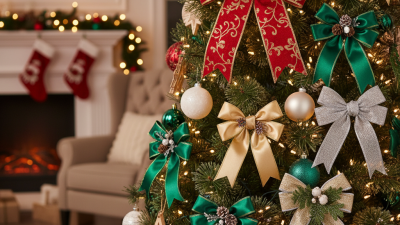
Popular Christmas tree bow styles for 2026 are likely to balance soft texture with a little structure. Velvet bows in burgundy, forest green, or warm ivory bring depth without relying on shine. A wired edge helps each loop hold its shape, especially near the top of a full tree. Keep the tails short enough to rest among the branches, not cover ornaments below. Small detail, big difference. For a lighter look, try linen or cotton ribbon with a relaxed, slightly uneven bow. It pairs well with wooden ornaments and natural greenery, though it may look too plain on a heavily decorated tree.

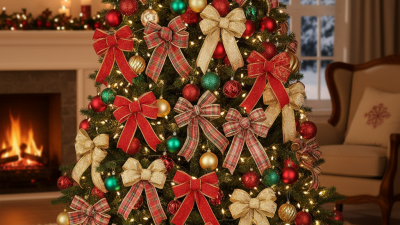
Oversized bows remain a striking choice for a tree topper, while narrow plaid ribbon can add a cozy pattern throughout the branches. Metallic thread or a fine satin edge offers sparkle without making the whole tree feel glossy. I’d be cautious about mixing too many finishes; velvet, plaid, and metallic ribbon can compete quickly. Choose one main texture, then repeat it in a few places for a considered look. Not every bow needs to match perfectly. A little variation can feel welcoming, but uneven placement may look accidental, so step back and check the tree from across the room.

Best Christmas Tree Bows for 2026 – Popular Christmas Tree Bow Styles for 2026
Bow Style Typical Materials Suggested Ribbon Width Best For Popular Color Choices Practical Notes
Classic Wired-Ribbon Bow Wired-edge woven ribbon, often polyester or a fabric blend 2.5–4 in (6–10 cm) Traditional trees and full, balanced decorating schemes Red, green, gold, ivory Wired edges help loops hold their shape and make the bow easier to fluff after storage.
Soft Velvet Bow Velvet or velvet-look fabric ribbon 2.5–4 in (6–10 cm) Cozy, elegant, or vintage-inspired trees Burgundy, forest green, navy, cream Its soft surface adds texture; keep it away from damp areas and store it loosely to prevent crushing the pile.
Rustic Burlap-Style Bow Burlap, jute-look mesh, or cotton ribbon 2.5–3.5 in (6–9 cm) Farmhouse, woodland, and natural-material themes Natural tan, cream, muted red, sage Frayed edges suit a relaxed look, while wired versions are generally easier to shape than unwired fabric.
Classic Tartan Bow Woven plaid ribbon, commonly polyester or cotton blend 2.5–4 in (6–10 cm) Traditional, cabin, and heritage-inspired decorations Red and green, navy and green, red and black Choose a scale of plaid that remains visible from a distance; smaller patterns work well on compact trees.
Metallic Accent Bow Metallic-finish ribbon, lamé-style fabric, or decorative mesh 1.5–3 in (4–8 cm) Glamorous trees and ornaments with reflective finishes Gold, silver, champagne, copper Use a few as highlights alongside matte decorations to avoid an overly reflective appearance.
Scandinavian-Inspired Minimal Bow Plain linen-look, cotton, or narrow woven ribbon 0.75–2 in (2–5 cm) Simple, natural, and uncluttered tree designs White, oatmeal, soft gray, muted red Smaller loops and restrained colors keep the style understated; pair with wood or paper ornaments if desired.
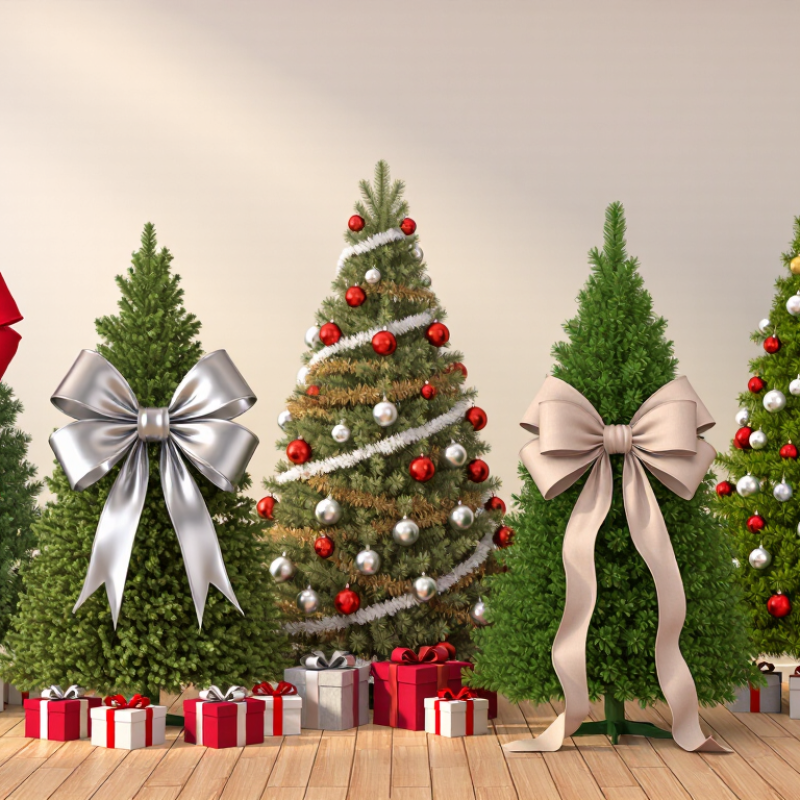
Oversized Tree-Topper Bow Wide wired ribbon or sturdy fabric ribbon 4–6 in (10–15 cm) Tall trees or displays that need a prominent finishing accent Red, gold, ivory, deep green Check that the bow is proportionate to the tree and secure it to a stable branch or a suitable topper support.
Layered Two-Ribbon Bow Two coordinated ribbons, such as velvet with plaid or satin with sheer ribbon 1.5–3 in (4–8 cm) per ribbon Full, dimensional decorating schemes Coordinated pairs such as red and gold or green and ivory Combining different widths or textures adds depth; use a secure tie or floral wire to hold the layers together.
Suggested styles and ribbon dimensions are general decorating guidance; choose bow size to suit the tree and the weight of its branches.

Materials, Sizes, and Colors to Consider

For a 2026 Christmas tree, choose a bow material that suits the room and the branches. Velvet feels soft and substantial, while wired-edge ribbon helps loops and tails hold their shape. Linen and cotton offer a relaxed texture, but large bows may droop on flexible branches. Check the attachment, too: a secure tie should hold without crushing the needles. Test it first. On a fresh tree, avoid sharp wire ends that could scratch branches.

Size matters more than a package label suggests. For a six- to seven-foot tree, bows around six to ten inches wide often stand out without crowding ornaments. Taller trees can carry larger bows, though a single oversized bow near the top may look unbalanced. Step back and check the scale from across the room. Deep red and forest green feel traditional; cream, copper, or muted blue can complement existing decorations. Compare ribbon colors with the tree lights on, since warm bulbs can change how shades appear. Not always better. A slightly uneven tail may look less polished, but it can also make the tree feel more personal.

How to Choose a Bow for Your Tree and Decorating Theme

Choosing a Christmas tree bow starts with the tree itself, not a passing trend. Use its height and branch strength as your guide. A wide, structured bow can anchor a tall tree, while a small, soft bow suits a tabletop tree. Check the scale. If the bow hides several branches, it may be too large.

Match the material to your decorating theme. Velvet and satin bring a formal, polished look; linen, cotton, or lightly frayed ribbon feels more relaxed. For a rustic theme, try warm neutrals or deep green. Metallic ribbon can catch the lights, but too much shine may compete with ornaments. Keep it simple. Repeat one or two colors already on the tree for a more connected look.

Placement matters as much as color. A top bow should sit securely without bending the leader branch; wired ribbon can help shape loops and tails, though it may need adjusting after the lights go on. For a balanced look, add smaller bows near the outer branches rather than clustering them all in one spot. Step back and view the tree from across the room. I’ve found that a bow can look perfect up close and oddly heavy from the doorway, so a small adjustment is often worth making.

Where and How to Place Bows on a Christmas Tree

Choose bows that suit the tree’s scale: oversized loops can overwhelm a narrow tree, while tiny bows may disappear among dense branches. Begin near the top, then place a few bows down the front in a loose, staggered line. Add others toward the sides, turning some slightly inward so they remain visible from different angles. Secure each bow with its attached wire or a soft, reusable tie. Avoid pulling branches out of shape.

Step back every few minutes and check the tree from across the room. Space bows at different heights, and leave a little greenery between them. On a full tree, tuck a few bows slightly deeper to add depth; on a sparse tree, keep them near branch tips. Pair them with ornaments, but avoid placing a bow directly beside every large ornament. A perfectly even pattern can look stiff. If it does, move one bow and reassess.

Tips: Fluff each loop before hanging. Check the tree from the doorway, then adjust any bow hidden behind a branch. Keep the heaviest bows on sturdy limbs, and use fewer near the top. A small asymmetry often feels more natural.

Best Christmas Tree Bow Placement for 2026

Suggested share of your bows by tree zone for a balanced look:

Use this distribution as a decorating guide, not a measured industry standard. Place a few bows near the top, spread most through the upper and middle sections, and add fewer near the bottom. Tuck bows into branches and vary their angles for a natural finish.