Why Choose Christmas Garland With Lights?
Choosing Christmas Garland With Lights can transform a plain staircase, mantel, or doorway into a warm seasonal display. The effect is immediate. Tiny bulbs trace the greenery, creating soft points of light across dark winter evenings. Unlike separate garlands and light strings, this combined design usually reduces setup time and prevents tangled wires.
In my experience, pre-lit garlands are especially useful for busy homes, shops, and reception areas. They create a consistent look, even when decorations are placed by different people. LED bulbs are a practical choice because they generally use less energy and produce less heat than older incandescent bulbs. However, quality still matters. A low-cost product may have weak branches, uneven lighting, or a short power cord.
Reliable manufacturers should clearly state the garland’s length, lighting type, power source, and recommended location. Check whether it is approved for indoor or outdoor use before installation. Look for protected connections, sturdy wiring, and a timer when convenient operation matters. Inspect the cord before use, and keep connections away from moisture unless the product is specifically rated for it.
A realistic choice depends on your space. A dense garland may look beautiful on a mantel but feel crowded on a narrow banister. Warm white lights suit traditional interiors, while multicolor bulbs create a more playful atmosphere. Not every design will work everywhere. That is worth remembering. The best option balances appearance, durability, installation effort, and safe everyday use. With thoughtful selection, Christmas Garland With Lights can provide dependable decoration rather than a temporary visual solution.
What Christmas Garland With Lights Is and How It Works
Why Choose Christmas Garland With Lights?
What Christmas Garland With Lights Is and How It Works
Christmas garland with lights combines decorative greenery, wiring, and small light sources in one flexible strand. It can frame a doorway, staircase, mantel, or window. Most modern versions use LED bulbs fixed along insulated copper wire. When electricity flows through the circuit, each LED produces light with little heat. A plug, battery pack, or low-voltage adapter supplies power. Some designs include timers, dimmers, or flashing modes. That small controller changes the atmosphere quickly.
Lighting efficiency matters. According to the U.S. Department of Energy, LED lighting uses at least 75% less energy than incandescent lighting. LEDs can also last up to 25 times longer. This helps explain their popularity in seasonal decoration. However, energy savings depend on length, operating hours, and power settings. A long garland can still consume noticeable electricity. I think shoppers sometimes overlook that detail.
In practical use, spacing affects the visual result. Tightly placed bulbs create a bright, festive outline, while wider spacing gives softer points of light. Check the indoor or outdoor rating before installation. The National Fire Protection Association advises keeping decorations away from heat sources and inspecting electrical cords for damage. Secure the garland gently, without crushing its wires. It should look effortless, though installation rarely feels effortless at first.
Why Choose Christmas Garland With Lights?
What Christmas Garland With Lights Is and How It Works
Christmas garland with lights combines decorative greenery with a connected string of electric bulbs. When plugged in, electricity flows through the wire to power each bulb. LED garlands generally use less energy than incandescent garlands while producing a similar decorative effect.
Estimated electricity use assumes one 100-light garland operating for 6 hours per day over 30 days. The LED example uses 6 watts, while the incandescent example uses 40 watts. Energy use is calculated as watts × hours ÷ 1,000.
Decorative and Practical Benefits of Lighted Garland
Why Choose Christmas Garland With Lights?
Decorative and Practical Benefits of Lighted Garland
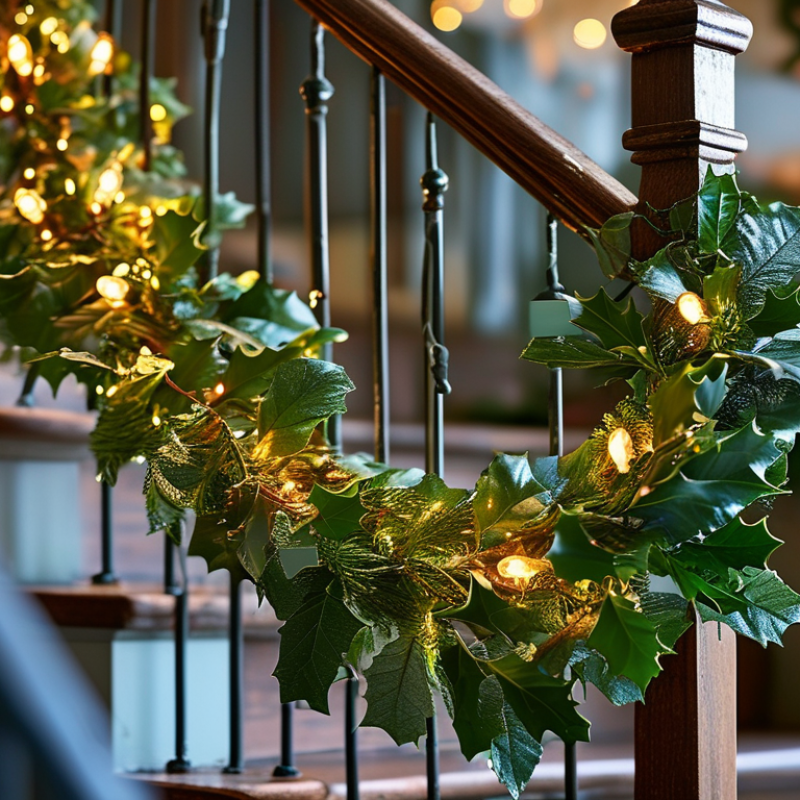
In my decorating experience, lighted garland changes a plain staircase into a warmer focal point within minutes. Its small bulbs trace railings, mantels, windows, and door frames with gentle visual rhythm. Green foliage softens hard surfaces, while warm light adds depth after sunset. The effect feels festive without demanding oversized ornaments or crowded shelves.
Lighted garland also solves practical decorating problems. It can fill a narrow space where a table lamp would obstruct movement. Battery-powered sections help in areas without nearby outlets, though batteries may need frequent replacement. Timer settings can reduce daily effort and prevent lights from staying on all night. I prefer flexible wiring, because rigid strands often leave awkward gaps around corners. Flame-resistant material and intact insulation matter more than a perfect appearance.
Placement still requires judgment. On a busy staircase, loose loops can catch sleeves or become a tripping hazard. Secure the garland with suitable clips, and keep cords away from heat sources and damp areas. I once used too much greenery on a small mantel, and the display looked heavy rather than elegant. Removing one section improved the balance. That mistake reminded me to measure the space before decorating, not after. A simple arrangement often leaves more room for stockings, candles, or everyday movement.
Main Types of Christmas Garland With Lights
Christmas garlands with lights come in several practical types, and each creates a different atmosphere. Pre-lit evergreen garlands offer a traditional look with less decorating work. Their built-in bulbs usually sit evenly along the branches. LED versions use less energy and produce less heat than older bulb styles. They are suitable for mantels, stair rails, and covered entryways. Micro-light garlands use thin wires and tiny bulbs. They look delicate around mirrors or dining tables. Battery-powered designs avoid visible cords. However, batteries may need frequent replacement during long celebrations. Plug-in garlands provide steadier illumination for extended evening use. They need a nearby outlet.
Outdoor garlands require closer attention. Look for clear outdoor-use instructions and suitable weather protection. A weather-resistant construction matters on a porch exposed to mist or snow. I check the cable, socket, and bulb connections before installation. Small damage can become a larger concern. It takes only a minute. Never cover ventilation openings or place lights against hot surfaces. For a fuller appearance, compare needle density, branch flexibility, and wire concealment. A thick garland hides a railing better, while a slim style suits narrow shelves. No type is perfect. Battery models offer freedom but sacrifice convenience. Plug-in styles are reliable but less flexible. Choose according to location, available power, and the amount of daily maintenance you can accept.
How to Choose the Right Lighted Garland
Choosing Christmas garland with lights is not only about brightness. The lighted garland should fit the space, power source, and decorating habit. Measure the mantel, staircase, or doorway before buying. Add a little extra length for soft curves, but avoid excessive wire. Warm white LEDs usually create a gentler, more traditional appearance. Cool white LEDs look sharper and more modern. Check bulb spacing carefully. Closely spaced bulbs create an even glow, while wider spacing leaves darker gaps.
Energy use also matters. The U.S. Department of Energy reports that LED lights use at least 75% less energy than incandescent lighting and can last up to 25 times longer. That makes LEDs a practical choice for long evening displays. For outdoor garland, look for clear weather-resistance information and a certified safety label. The National Fire Protection Association reported that electrical distribution or lighting equipment contributed to 40% of reported Christmas tree fires from 2016 to 2020. Inspect every cord before installation, and replace damaged strands. Small checks matter.
A timer can reduce forgotten overnight use. Choose one with stable clips or flexible branches, especially for stair rails. I often buy too much length. That mistake creates tangles and uneven light. Test the garland on the floor first, then hang it. Also compare the adapter, connector, and replacement-bulb information. A beautiful strand becomes inconvenient when one failed section cannot be repaired. Expect a little trial and error. That is part of choosing well.
Safe Installation, Maintenance, and Storage Methods
Why Choose Christmas Garland With Lights?
Safe installation begins with a careful inspection. Check every wire, socket, plug, and bulb before hanging the garland. Look for cracked insulation, loose connections, scorch marks, or exposed copper. Do not use damaged lighting, even if only one bulb seems faulty. I once ignored a loose plug and had to remove the entire display after installation. That mistake wasted time and created avoidable risk.
Choose lighting approved for the intended location. Outdoor garlands need weather-resistant construction, while indoor products should remain away from sinks, heaters, curtains, and fireplaces. Use clips designed for decorations instead of nails or staples, which may cut the cable. Keep connectors above wet ground. A residual-current safety outlet adds protection outdoors, but it does not replace regular inspection. Follow the supplied instructions carefully. If an outlet, cable, or circuit becomes hot, switch it off and ask a qualified electrician for help.
Maintenance should be simple and frequent. Turn the lights off before cleaning or replacing bulbs. Wipe dust with a dry, soft cloth, and never spray liquid onto electrical parts. After rain, check for moisture before reconnecting the garland. Storage also matters. Remove decorations gently, coil wires loosely, and avoid tight knots. Store the garland in a dry container away from sunlight, pests, and heavy objects. Labeling indoor and outdoor sets helps prevent a careless mix-up next year. Mine still gets tangled sometimes, so a cardboard spool may be worth using.