Leave Your Message
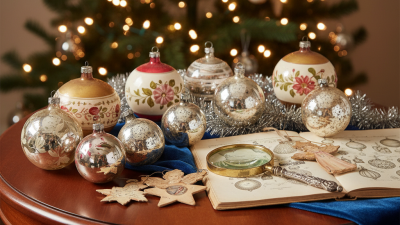
Antique Christmas Ornaments can make a tree feel connected to another time, but online listings reveal only part of the story. A small glass bauble may show age through its faded finish, uneven shape, or delicate metal cap. Those details can be charming. They can also be hard to judge from a polished photograph. Before buying, look beyond the styling and read the description closely. Check the stated materials, dimensions, condition, and any available information about the ornament’s history. A seller’s estimate is useful, but it is not proof of age.
Good online shopping depends on careful questions and realistic expectations. Request clear images from several angles, including close-ups of chips, repairs, paint loss, and hanging loops. Ask whether the ornament has been restored and how it will be packed for shipping. Review the seller’s return terms and use a payment method with clear buyer protections. A trustworthy seller should answer directly and distinguish documented facts from personal opinion. Even then, photographs can conceal a flaw, and shipping can expose a fragile piece to risk. I have found that patience helps, though it does not make every purchase certain. Small details matter. This guide explains how to compare listings, assess condition, and choose Antique Christmas Ornaments with greater confidence—without treating a beautiful story as verified history.
An antique Christmas ornament is not simply an old decoration. In most collecting contexts, “antique” means at least 100 years old. That date matters, but it does not prove quality or authenticity. A hand-blown glass bauble from the early twentieth century may qualify. A mass-produced ornament from the 1980s may look nostalgic, but it is vintage. The distinction is easy to miss online.
Look closely at construction details before buying. Antique glass often shows tiny air bubbles, uneven shapes, and delicate hand-painted lines. Examine the metal cap, hanging loop, and silvered interior. Original parts can support an age claim. However, replacement caps and fresh paint may reduce historical value. Ask for clear photographs of the front, back, top, and any damaged areas. A seller who avoids these requests deserves caution.
Provenance can strengthen confidence, especially when records, family history, or an old collection listing exists. Still, paperwork may be incomplete. Age estimates are not always exact. I would rather see an honest note about repaired paint than a perfect description with no evidence. Check measurements carefully, because older ornaments are often smaller than modern decorations. Compare surface wear with the claimed date, and avoid treating “antique-style” language as proof of age. Handle fragile pieces gently after delivery.
| Evaluation Dimension | Reliable Information | What to Check in an Online Listing | Buyer Action |
|---|---|---|---|
| Meaning of “antique” | An antique is generally an item that is at least 100 years old. In 2026, an ornament made in 1926 or earlier normally meets the age criterion. | The listing should provide an estimated production date or a clearly explained historical basis. | Do not treat the words “old-fashioned,” “retro,” or “vintage-style” as proof of antique age. |
| Vintage versus antique | Vintage usually describes an older collectible, often around 20 to 99 years old, but the term has no single legal age threshold in every market. | Look for a specific year range instead of relying only on the word “vintage.” | Ask whether the seller is describing age, style, or a newly manufactured reproduction. |
| Historical period | The Victorian period is commonly dated from 1837 to 1901; the Edwardian period is commonly dated from 1901 to 1910. Period labels should support, not replace, evidence. | Check whether the design, materials, construction, and stated date are consistent with the claimed period. | Treat broad period claims as estimates unless supported by provenance or specialist references. |
| Material | Early ornaments may be made from blown glass, pressed glass, wax, wood, paper, cardboard, fabric, or metal. Material alone does not establish age. | Request close-up images of the surface, interior, cap, hanging loop, seams, and painted details. | Compare the material and construction with documented examples from the claimed period. |
| Construction clues | Hand-blown glass can show variation in thickness and shape. Mold seams, mechanically uniform decoration, or modern fittings may indicate later production, although no single clue is conclusive. | Inspect the neck opening, seam lines, paint application, glitter, and suspension fitting. | Use several clues together and avoid making an age decision from one photograph. |
| Decoration and finish | Age-appropriate wear may include small losses, fading, oxidation, or surface abrasions, but artificial distressing can imitate old wear. | Check whether wear appears naturally located on edges and raised areas, and whether the finish is consistent throughout. | Ask for unedited, high-resolution photographs taken in natural or neutral light. |
| Condition | Common condition issues include cracks, chips, repaired breaks, missing decoration, paint loss, corrosion, and loose or replaced fittings. | The description should identify every known defect, repair, replacement, and missing component. | Request a written condition report before paying, especially for fragile glass or wax ornaments. |
| Provenance | Provenance is the documented ownership or history of an object. Receipts, dated photographs, family records, and collection notes can strengthen an age claim. | Look for dates, previous ownership details, estate documentation, or other records that can be checked. | Separate documented provenance from an unsupported statement such as “from an old estate.” |
| Seller transparency | A dependable listing normally identifies uncertainty instead of presenting an unverified date as fact. | Check seller feedback, return terms, item-specific photographs, and answers to previous buyer questions. | Be cautious when the seller refuses additional photographs or avoids direct questions about age and repairs. |
| Measurements | Ornament sizes vary considerably, and photographs can make an item appear larger or smaller than it is. | Confirm height, width, depth, weight when relevant, and the size of the hanging opening. | Compare the stated measurements with a familiar household object or ruler shown in a photograph. |
| Price assessment | Value depends on age, rarity, design, material, condition, completeness, documented history, and demand—not age alone. | Compare similar completed sales rather than only current asking prices. | Set a maximum budget after adding shipping, insurance, taxes, and possible restoration costs. |
| Shipping protection | Glass and other brittle materials can be damaged by impact, pressure, temperature changes, and poor packing. | Confirm individual wrapping, cushioning, a rigid box, moisture protection, and tracking. | Clarify who bears the risk of transit damage and photograph the package before opening it. |
| Return and payment safety | A clear return policy reduces the risk of buying an item that differs materially from its description. | Review the return period, exclusions for fragile goods, refund conditions, and payment protection. | Keep the listing, messages, photographs, receipts, and tracking information until the transaction is complete. |
Note: Age classifications and market terminology can vary by country and seller. The strongest purchase decision combines documented age, consistent construction, transparent condition reporting, and a protected transaction.