Leave Your Message

How to Source Vintage Christmas Decorations in 2026?

Sourcing Vintage Christmas Decorations in 2026 takes more than spotting a charming glass bauble. Buyers need to judge condition, age, materials, and seller descriptions before spending. The seasonal market is broad: the National Retail Federation forecast U.S. holiday sales of $979.5 billion to $989 billion for November and December 2024. That figure covers many retail categories, not vintage ornaments alone. It does, however, show the scale of holiday shopping and the competition for distinctive seasonal goods.

Resale habits offer another useful clue, with an important caveat. ThredUp’s 2024 Resale Report projected the global secondhand apparel market could reach $350 billion by 2028. Apparel is not Christmas décor, so this is context, not proof of ornament demand. The evidence is imperfect. For practical sourcing, compare estate-sale listings, antique-shop stock, charity-shop finds, and established online marketplaces. Check for chipped glass, loose wiring, faded paint, missing labels, and clear photographs. Ask sellers about provenance when they can provide it, and treat vague claims of age cautiously.

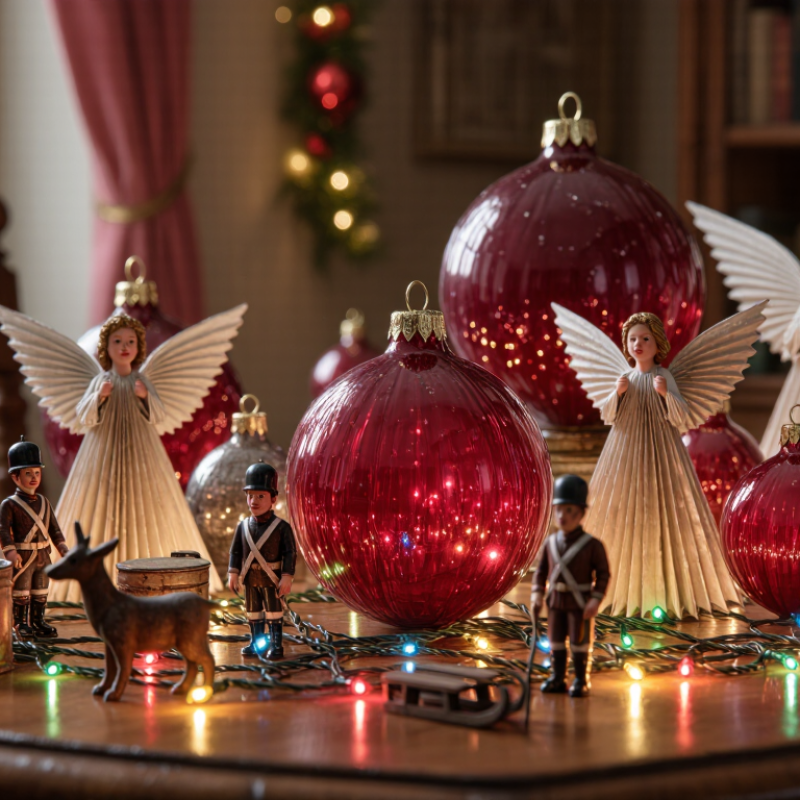
A successful collection needs a point of view, not just a full storage box. Choose a palette, period, or material—such as red glass, paper angels, or old tin figures—then record purchase prices and condition. Prices can vary widely, and a nostalgic look does not guarantee rarity or value. Some judgment calls will remain. That is part of the work: sourcing carefully, documenting what is known, and leaving room to change your mind.
How to Source Vintage Christmas Decorations in 2026?

Define What Counts as a Vintage Christmas Decoration in 2026

In 2026, a practical working definition of vintage is a decoration made in 2006 or earlier. “Vintage” has no universal cutoff, so treat age as a useful guide, not proof. A faded 1990s glass bauble may qualify; a new bauble made to look faded does not. The boundary is imperfect. Deloitte’s 2024 Holiday Retail Survey estimated average planned seasonal spending at $1,778, showing how much buying competes for attention during the holidays. Age and provenance help explain why an older piece may be worth choosing.

Look for clues, not just patina. Check dated packaging, maker’s marks, old price stickers, construction, and materials. A paper label browned at the edges can help, but it can also be misleading. Separate genuine period pieces from later reproductions and recent secondhand goods. The National Retail Federation forecast 2024 holiday sales of $979.5–$989 billion; that broad retail figure is not specific to vintage décor, but it shows the scale of seasonal shopping. Record what you know about each item, and clearly note what remains uncertain.

Tips: Photograph labels and details before buying. Ask sellers about age and repairs. Inspect delicate glass for chips, and check that electrical decorations work safely. Don’t treat “old-looking” as “old.” A little doubt is useful.
How to Define a Vintage Christmas Decoration in 2026

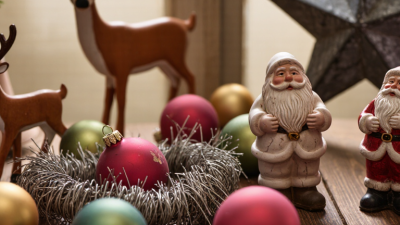
A common age-based guide: vintage items are at least 20 years old; antiques are at least 100 years old. These are conventions, not universal legal definitions.

In 2026: Decorations made in 2006 or earlier meet the common vintage age threshold; those made in 1926 or earlier meet the common antique threshold. Check construction, materials, provenance, and wear as well as age when sourcing.

Choose Reliable Places to Search for Vintage Holiday Pieces

For vintage Christmas decorations, begin with places where items can be examined and questions answered. Estate sales often reveal mixed collections: glass ornaments wrapped in tissue, faded paper garlands, or small wooden figures stored in old boxes. Ask where pieces came from and whether the seller knows their age. Answers may be incomplete. That matters.

Antique fairs and established secondhand shops can offer clearer descriptions and direct conversations. Look closely at seams, hanging loops, paint, and signs of repair. A little wear can be part of an ornament’s character, but cracks near a hook may make it fragile. Ask whether the price reflects damage. Compare several stalls before deciding; excitement can make an ordinary piece seem rare.

Online resale listings widen the search, but reliability depends on detail. Prefer sellers who provide close photographs, measurements, and straightforward condition notes. Request another photo of a chipped edge or a maker’s mark if needed. Check shipping terms and the return policy before paying. For older electric decorations, ask about wiring and avoid plugging in anything with frayed cords or exposed connections. Some listings are vague. I would pass on those, even when the colors look perfect. A missed find is disappointing; a damaged one can be worse.

How to Source Vintage Christmas Decorations in 2026? — Choose Reliable Places to Search for Vintage Holiday Pieces

Place to Search Pieces to Look For Why It Can Be Useful Checks Before Buying Practical Search Tip for 2026
Estate sales and household clear-outs Glass ornaments, tree toppers, holiday linens, ceramic figures, and boxed decorations Items may be sold together with family collections, giving shoppers a chance to find coordinated pieces and original packaging. Inspect each item for chips, cracks, missing parts, odors, and signs of damp storage. Ask whether the seller knows the item’s history. Check local sale listings regularly, especially in late autumn and after the holiday season, when household clear-outs may include seasonal décor.
Antique and vintage shops Clearly dated ornaments, older holiday postcards, figurines, and decorative objects Items are usually available to examine in person, and shop staff may be able to explain how an item was identified or dated. Look for repairs, replacement components, repainting, and condition details that may not be obvious at first glance. Ask about return policies and whether the seller can distinguish an older piece from a newer reproduction.
Flea markets and vintage fairs Mixed ornament lots, wreath decorations, small collectibles, and handmade holiday pieces In-person browsing makes it easier to compare condition, materials, and asking prices across multiple sellers. Handle fragile items carefully. Check that sets are complete and that the price reflects any damage or missing pieces. Bring a short checklist of the styles, colors, and materials you want so that appealing but unsuitable finds are easier to pass up.
Charity shops and thrift stores Everyday holiday ornaments, seasonal tableware, stockings, and vintage-style décor Stock changes frequently, and prices are often marked individually, making these shops useful for casual, repeated searches. Inspect for cracks, loose seams, stains, and missing labels or accessories. Check glassware carefully for chips around the rim. Visit at different times rather than relying on a single trip; seasonal donations may arrive throughout the year.
Online resale listings Specific ornament types, complete sets, dated decorations, and pieces not commonly found nearby Search filters and saved searches can help locate items across a wider area and make it easier to compare listings. Request clear photos of the front, back, markings, flaws, and packaging. Confirm dimensions, shipping protection, and the return policy. Use descriptive searches that include material, approximate age, shape, and condition; treat seller descriptions of age as claims to verify.
Local auctions and online estate auctions Large collections, boxed sets, holiday collectibles, and décor sold in grouped lots Lots can offer access to multiple pieces at once, but contents and condition may vary considerably. Read the lot description, inspect every available photograph, and include buyer fees, shipping, and collection costs when setting a bid limit. Decide your maximum total cost before bidding, and avoid assuming every item in a mixed lot is complete or in usable condition.
Community swap events and local listings Family decorations, handmade pieces, seasonal accessories, and items available for local collection Local pickup can reduce shipping risk for fragile décor and allows buyers to inspect items before completing a purchase. Arrange exchanges in a safe public place when appropriate, and agree on the item’s condition and price before traveling. Search neighborhood noticeboards and community groups using general item descriptions rather than relying on a single keyword.

Safety note: Treat old electrical lights as untested unless inspected by a qualified professional. Do not plug in damaged wiring, and use extra care with fragile glass, deteriorating plastics, or older materials of uncertain composition.

Verify Age, Materials, and Condition Before Buying

How to Source Vintage Christmas Decorations in 2026?

A decoration can look old without being vintage. Before buying, check its construction and ask the seller what supports the claimed age. Hand-painted details, uneven glass, older-style metal caps, and worn original packaging may offer clues, but none proves a date alone. Compare several clues rather than relying on one charming detail. If the history is uncertain, treat it as uncertain.

Tips: Use a phone light to inspect cracks, loose seams, flaking paint, and repairs. Ask for close-up photos and a clear return policy. Never plug in old lights with cracked insulation or exposed wiring.

Materials affect both value and safe handling. Thin glass ornaments may have hairline cracks near the cap; paper decorations can hide water stains beneath folds. Look for rust, sticky residue, strong odors, or paint that transfers when gently touched with a clean, dry cloth. Don’t scrape surfaces to test them. Sellers may not know whether an older finish contains hazardous substances, so avoid handling damaged coatings and seek qualified guidance if concerned. Condition matters, but so does honest uncertainty. I would rather leave a small doubt unresolved than turn a guess into a fact.

Compare Prices and Complete a Safe Purchase

In 2026, compare vintage Christmas decorations by condition, completeness, and total cost—not just the listing price. The National Retail Federation reported that U.S. holiday sales reached $994.1 billion in 2024, up 4% year over year. Deloitte’s 2024 holiday survey put planned seasonal spending at $1,778 per consumer, 8% above 2023. These figures describe broad holiday spending, not vintage-decoration prices, but they help explain why seasonal listings may climb. Compare several sold listings with similar materials, dimensions, and condition.

Ask for close-up photos of chips, paint loss, maker’s marks, and any included accessories. A box can look complete from above and still be missing its tiny tree topper. Small details matter. For plug-in pieces, request clear photos of the cord and plug; do not use items with cracked insulation or exposed wires. Ask about the return window and shipping protection before paying. Glass ornaments need padding and a box that prevents movement.

Calculate the delivered price, including shipping, insurance, and any stated fees, then compare it with recent sold prices. A low listing can become expensive after careful packing. Keep payment and seller messages on the platform, and save the listing photos and receipt. I would still hesitate over a “rare” label without evidence; rarity is not the same as fair value.

Store and Care for Vintage Decorations Properly

When sourcing vintage Christmas decorations in 2026, check condition before bringing them home. Look for loose glitter, brittle paper, cracked glass, flaking paint, and frayed cords. Photograph each piece and note its material and damage. That small record helps you choose safer storage. Avoid testing questionable electrical items; a visual inspection cannot confirm wiring is safe.

Store decorations in a cool, dry room, away from radiators, sunlight, and damp basements. The Canadian Conservation Institute’s preventive-care guidance gives 40–60% relative humidity as a general range for many collections, though mixed materials may need different conditions. The National Park Service Museum Handbook recommends limiting light to 50 lux for highly light-sensitive objects. Tissue paper can cushion fragile pieces, while sturdy, divided boxes help prevent glass ornaments from knocking together. Skip tight wrapping around peeling surfaces. Over-cleaning is tempting. It can do more harm than dust.

Tips: Use a soft brush on sturdy surfaces, not on loose paint or glitter. Keep paper and textiles in the dark. Remove batteries from battery-powered pieces, and store them separately. Label boxes with contents and any known damage; I still find that easy to forget.