Leave Your Message
Vintage Christmas Ornaments can turn a holiday display into a small record of changing tastes, materials, and family traditions. A hand-painted glass ball catches the tree lights differently from a pressed-metal reflector. A felt Santa may show loose stitching, while an old cardboard ornament can feel surprisingly delicate. Those details are part of their appeal, but they also make collecting a careful exercise.
This guide explores ten ornament styles collectors often seek, including glass figures, indented baubles, and delicate clip-on birds. It considers more than appearance. Construction, maker’s marks, age, condition, and any known history can all help explain an ornament’s interest and value. “Vintage” does not have one universal age cutoff, so descriptions should be read with care. Repairs and reproductions can be difficult to spot in a quick photograph. Look closely at seams, paint, hooks, and wear, and compare similar pieces before making a judgment.
Small flaws matter. A tiny chip may affect value, yet it can also tell a story of years spent on a family tree. No checklist settles every case. Even experienced collectors can disagree about a piece’s age or originality. The aim here is not to promise a perfect find, but to offer useful context for recognizing distinctive ornaments and asking better questions. Whether you collect a particular maker or simply love the glow of an old glass bauble, these ten examples offer a thoughtful place to begin.
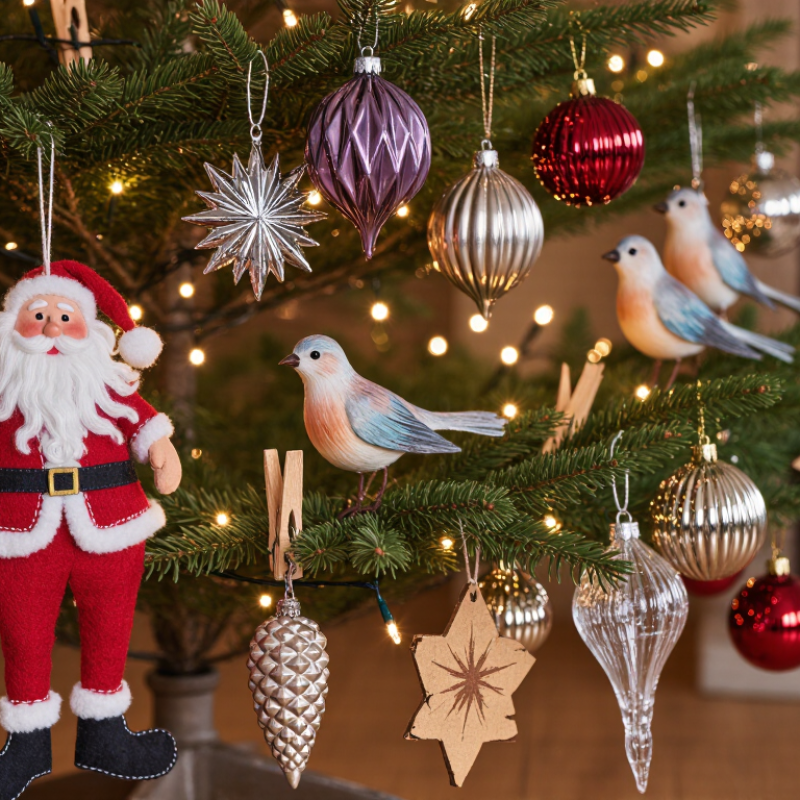
Collectors often use “vintage” for Christmas ornaments made roughly 20 to 99 years ago, though the boundary is not universal. An ornament’s age alone does not prove its history. Look closely at its materials and construction: thin blown glass, pressed paper, molded plastic, metal caps, or hand-painted details can offer useful clues. A small seam, faded paint, or uneven finish may reflect how an ornament was made, not necessarily damage.
Their appeal often comes from the evidence of use. A tiny patch of rubbed color, a slightly bent hanger, or a handwritten date on an old box can connect an object to past celebrations. Still, wear is not automatically charming. Cracks, loose fittings, and missing pieces can affect both stability and value. Condition matters.
When assessing an ornament, compare its shape, materials, and finish with dated examples from reliable museum collections, reference books, or specialist guides. Keep packaging and purchase records when available; they can help establish provenance, but they are not proof by themselves. And value can be hard to pin down. Two similar ornaments may differ greatly because of condition, rarity, or collector interest. Sometimes the history is uncertain. That uncertainty deserves a note, not a confident guess.
| No. | Ornament Type | Typical Period | Materials and Identifying Features | Collectible Appeal | Condition Considerations |
|---|---|---|---|---|---|
| 1 | Kugel glass ornaments | Mid-19th to early 20th century | Heavy, mouth-blown glass, often with a distinctive metal hanging cap; early examples were made in Germany. | Collectors value their early history, substantial feel, varied shapes, and rich colored glass. Unusual forms and well-preserved surfaces are especially appealing. | Check for cracks around the neck, repaired caps, and loss or dulling of the original surface. |
| 2 | Dresden cardboard ornaments | Late 19th to early 20th century | Lightweight, embossed cardboard, often shaped as animals, fruit, toys, or other figures and finished with metallic-colored coatings. | The detailed embossed shapes and variety of designs make these ornaments particularly desirable to collectors of early German Christmas decorations. | Look for crushed edges, missing hanging loops, fading, and flaking or rubbed decoration. |
| 3 | Early glass figural ornaments | Late 19th to early 20th century | Blown glass formed into recognizable shapes such as fruit, animals, people, or everyday objects; many early examples were produced in Germany. | Distinctive subjects, hand-finished details, and the range of forms offer strong display and collecting interest. | Small projections and narrow parts are vulnerable to chips and breaks. Examine the cap and painted details carefully. |
| 4 | Glass reflector or indent ornaments | Primarily 1930s–1950s | Glass ornaments with a recessed or concave area, sometimes layered with reflective material or contrasting colors to create depth. | The recessed design catches and reflects light differently from a plain round bauble, making these ornaments visually distinctive on a tree. | Inspect the recessed area for cracks and check reflective finishes for peeling, corrosion, or substantial loss. |
| 5 | Mid-century glass baubles | Approximately 1930s–1960s | Commonly spherical, thin-walled glass ornaments with colored or metallic finishes; machine-made examples became widespread in the United States. | Collectors enjoy the broad range of colors and finishes, as well as the ability to assemble coordinated displays from a particular period. | Check for dents, cracks, paint loss, and replaced or mismatched caps. Original packaging, when present, can add historical context. |
| 6 | Cotton batting figures | Late 19th to early 20th century | Small figures made from cotton batting shaped around a lightweight core, sometimes with painted facial features, fabric details, or accessories. | The softly sculpted forms and handmade appearance distinguish them from glass ornaments. Figures and unusual subjects are often sought by specialist collectors. | Batting can flatten, stain, or become brittle. Avoid cleaning with water or applying pressure to fragile details. |
| 7 | Clip-on glass birds | Early to mid-20th century | Small glass bird ornaments designed to perch on a branch, often with a metal clip and sometimes a feather tail. | The perched pose adds variety to a tree, and differences in color, feathering, and clip style make them enjoyable to collect in groups. | Feathers may be missing or fragile, and clips can rust or loosen. Check that the glass body is intact. |
| 8 | Spun-glass ornaments | Late 19th to early 20th century and later revivals | Fine glass filaments arranged into airy forms, including stars, angels, and other delicate shapes. | Their light, intricate construction contrasts with heavier glass ornaments and reflects the skill involved in working with fine glass threads. | Filaments can snag, break, or shed. Store separately in a rigid container and avoid handling the most delicate sections. |
| 9 | Tin or pressed-metal ornaments | Late 19th to mid-20th century | Lightweight metal ornaments, often stamped or pressed into flat or shallow three-dimensional shapes and finished with paint or metallic color. | The crisp silhouettes and varied seasonal motifs offer a different look from glass and paper ornaments; examples with intact original decoration are especially attractive. | Watch for rust, bent edges, loose hanging loops, and repainting that may obscure the original finish. |
| 10 | Wooden folk-art ornaments | Early to mid-20th century | Carved, turned, or simply painted wooden decorations, including stars, animals, and small figures; styles vary by region and maker. | Collectors appreciate their handcrafted character, regional traditions, and durable contrast with fragile glass ornaments. | Look for splits, insect damage, unstable paint, and later repairs. Original surface finishes are part of an ornament’s history. |
What “vintage” means: The term has no single universal cutoff; it is commonly used for items several decades old, while some collectors reserve it for older pieces. The periods above are approximate, and age, rarity, condition, craftsmanship, and documented history all influence an ornament’s collectible appeal. No category or age alone guarantees a particular market value.