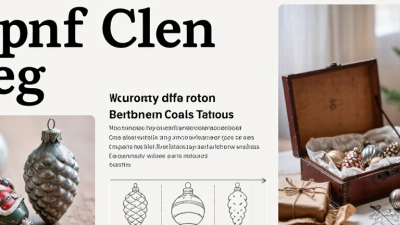
Retro Christmas Decorations bring warmth through familiar colors, aged finishes, and handcrafted-looking details. Think glass baubles in muted red, tin ornaments with worn edges, and wooden figures arranged beside a softly lit tree. These pieces can create a welcoming seasonal display, but appearance alone does not make a supplier dependable.
China offers a wide range of manufacturers and trading companies serving different product styles and order sizes. This guide explores suppliers of Retro Christmas Decorations and the practical details buyers should check before making contact. Look closely at product materials, finish consistency, customization options, sample policies, minimum order quantities, and production timelines. Ask for clear product specifications and recent photos of finished goods. Small details matter.
A polished catalog is useful, but it cannot answer every question. A sample may reveal uneven paint, fragile hanging loops, or colors that look different in natural light. Buyers should also confirm packaging requirements and how the supplier handles quality checks. These steps do not remove every risk. They make expectations clearer.
The suppliers featured in this overview are starting points for research, not automatic endorsements. Compare their capabilities against your own needs, request written quotations, and allow time to assess samples. Some details may still need clarification during discussions. That is normal. Careful evaluation can help buyers find decorations that suit their display, budget, and schedule without relying on festive photos alone.

Retro Christmas decorations evoke the visual language of mid-century holiday homes, not just an aged appearance. Think of glossy glass baubles, foil accents, flocked trees, paper chains, and playful reds, greens, and icy blues. Rounded shapes and small imperfections help create a nostalgic feel. Yet an item does not become retro simply because its paint looks worn. That distinction is easy to miss.
For suppliers, useful details include material, finish, color consistency, and how ornaments look under warm indoor light. A shiny bauble beside a brushed-metal star can feel authentic; several competing finishes may look cluttered.
Adobe Analytics reported that U.S. online holiday sales reached $241.4 billion in November and December 2024, up 8.7% year over year. NRF’s 2024 holiday forecast projected $979.5–$989 billion in seasonal retail sales. These figures describe a large holiday market, not retro décor demand specifically.
Buyers should compare samples and inspect packaging before ordering. And ask for close-up photos. A slightly uneven finish can add charm, but sometimes it just looks inconsistent.

China’s retro Christmas decor industry is organized as a connected supply chain, not a single factory sector. Yiwu’s wholesale network supports sourcing for small ornaments, ribbons, and packaging, while specialist workshops handle glass, metal, wood, and lighting components. Suppliers often coordinate several workshops before assembling a finished collection. That helps buyers combine aged-look baubles, ribbed bells, and faded-red fabric accents in one order. The divisions are not always tidy; smaller suppliers may outsource finishing or packing, so production control can vary.
Market data helps explain the export focus. Grand View Research valued the global Christmas tree market at USD 5.56 billion in 2023, though this figure covers trees, not the full decor category. UN Comtrade tracks Christmas articles under HS 950510, giving buyers a way to review trade flows alongside supplier quotations. For sourcing, ask factories to specify materials, surface finishes, carton quantities, and sample lead times. Photos alone can hide differences in patina and color.
Tips: Request a physical sample under warm and cool lighting. Confirm whether “vintage” means a printed effect, hand-applied finish, or naturally varied material. Small differences matter.
Choosing a Chinese supplier for retro Christmas decorations takes more than comparing unit prices. Check whether its past work includes aged finishes, glass ornaments, tin signs, or fabric figures. Ask for close-up sample photos and a physical sample. Colors should remain consistent across batches, not just look charming under showroom lights.
The National Retail Federation’s 2024 holiday survey projected average U.S. seasonal spending of $902 per consumer, including gifts, food, decorations, and other items. This is not decoration-only spending, but it shows why seasonal demand planning matters. Ask suppliers for realistic production capacity, lead times, and a written plan for peak-season orders. Details matter. A low quote means little if cartons arrive late or breakable pieces lack protective inserts.
Request material specifications, inspection records, and relevant test documentation, especially for products with lights or coatings. Compare the approved sample with goods during production, and agree on acceptable defect limits before payment. Confirm how the supplier handles replacements and packaging changes. Samples can mislead. A glossy finish may look convincingly vintage in photos, yet feel cheap in hand; I would treat this as a risk, not a minor cosmetic issue. Clear answers, traceable records, and consistent quality checks are stronger signs of reliability than polished sales language.
Notable retro Christmas decoration suppliers in China are best judged by finish, materials, and consistency—not catalog size alone. Look for makers of glass baubles, tin ornaments, paper garlands, and wooden figures. Request material details, close-up photos, carton dimensions, and a production sample. Small details matter: muted red paint, aged-looking foil, and warm-white bulbs can create a convincing vintage feel. They should not disguise weak workmanship.
Seasonal demand makes dependable delivery important. The National Retail Federation’s 2024 holiday survey put average U.S. seasonal spending at $890.49 per person. That total covered gifts, food, decorations, and other seasonal items, rather than decorations alone. Compare suppliers on sample-to-bulk consistency, quality checks, protective packaging, and realistic lead times. Ask whether finishes are hand-applied or machine-printed, and request inspection records. A low quotation may exclude inner trays or breakage protection.
Photos can flatter a sample. They can mislead, too. Approve a signed sample and check its colors under neutral light before production. One caveat: “retro” has no single standard. Reference images and specific finish notes are more useful than style labels. The extra checking can feel fussy, but skipping it may bring costly surprises.
Finding a Chinese supplier for retro Christmas decorations starts with checking who will actually make the goods. Ask for the company’s registered business details, factory address, and a live video walk-through of the workshop. Compare the address across documents, quotations, and sample-shipping labels; small mismatches deserve a clear explanation. Ask whether production is in-house or subcontracted, and request recent photos of the same item being made. Photos are clues, not proof. Request a pre-production sample in the exact color, size, finish, and packaging you plan to order. For distressed paint, brushed metal, or fabric trim, inspect edges, seams, and hanging loops under good light. Keep approved samples and written specifications together.
Before placing a bulk order, agree on quantity, unit price, carton dimensions, lead time, defect handling, and payment milestones in a written purchase order. Have an independent inspector check a random selection before shipment, especially for color variation, loose parts, and breakage risks. Ask for photos of packed cartons and confirm the shipping marks match your records. A supplier’s quick reply is useful, but it does not establish production capacity. Request references or documented export experience where available, then verify details directly. Small details matter. I would not treat one attractive sample as a guarantee; batch consistency can slip when schedules tighten. Build time for corrections, and record every change in writing.